

Donate
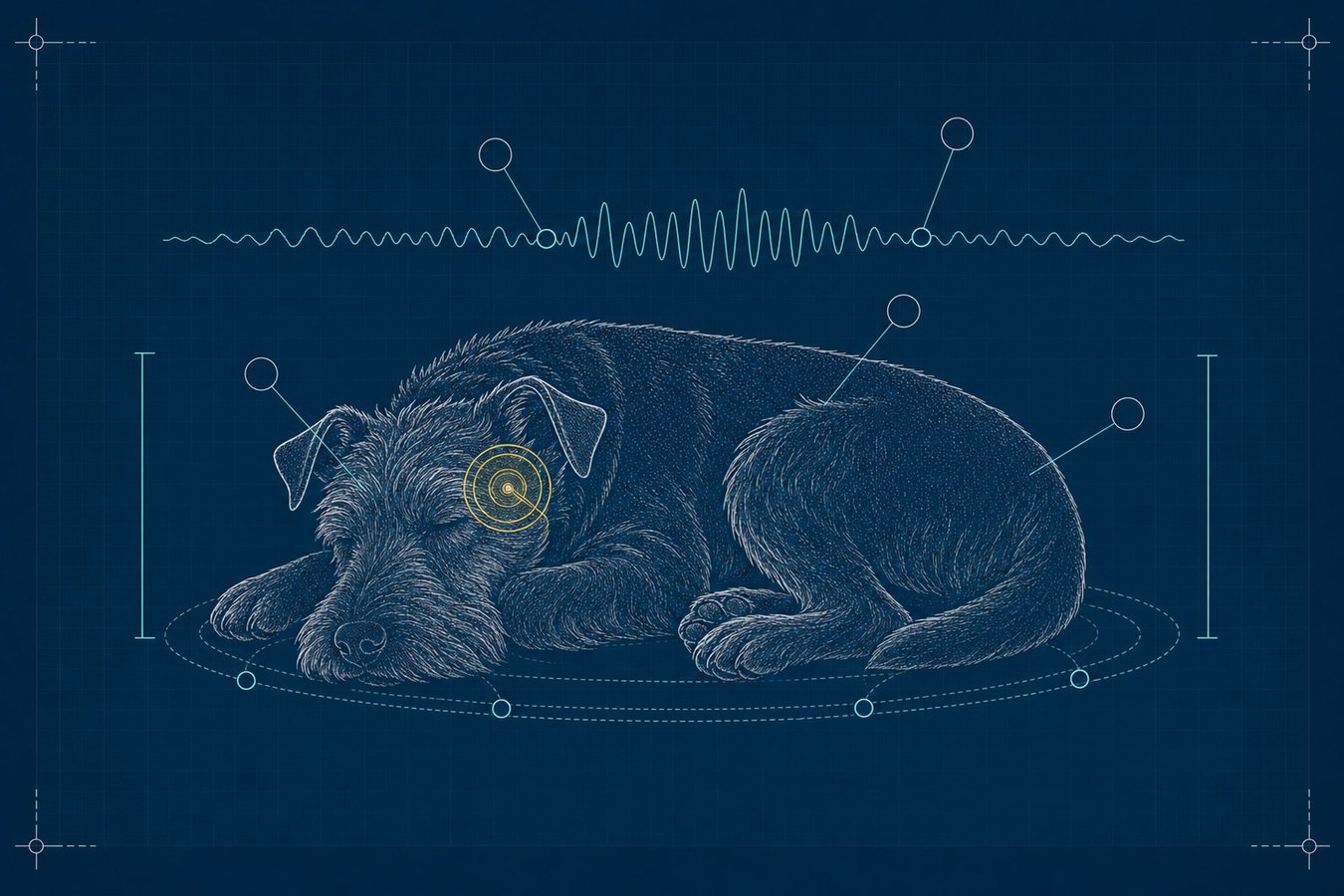
Blueprint schematic of a resting dog with an EEG-style sleep wave trace and inset brain and neuron detail plates.
Research & Innovation Fund

The Canine Sleep and Learning Project

Training programs track cues, repetitions, and technique closely, but far less attention goes to what happens after a lesson ends. This research studies how sleep quality and rest timing shape memory, emotional regulation, and long-term training success.

Be one of the first to fund this phase

$10,000 first-phase goal · Just launched

Goals extend as each phase completes and the next stage of the study opens for funding.

This research is still being organized. Tell us you are interested, and the Foundation will follow up as intake for this study opens. Sharing interest is not an application.

This gift is restricted to the Research & Innovation Fund and can only be used for that purpose.

About this campaign

The story behind this campaign

A dog completes a training lesson, performs well, receives reinforcement, and appears to understand.

But what happens next?

Does the dog sleep in a quiet environment? Return to active play? Experience kennel noise? Travel home? Encounter another difficult training session? Wake repeatedly during the night?

In people and other animals, sleep plays an important role in memory, learning, recovery, and emotional regulation. Yet everyday dog-training decisions rarely include clear, evidence-based standards for rest after learning.

The Canine Sleep and Learning Project will investigate whether better sleep can improve training results while reducing stress, frustration, and unnecessary repetition.

The Problem

Training outcomes are usually evaluated through repetition counts, reinforcement schedules, handler timing, equipment, session duration, reward value, cue clarity, and environmental distraction.

These variables matter, but they may not tell the complete story. A dog that appears forgetful, impulsive, irritable, or inconsistent may be:

  • Physically tired
  • Mentally overloaded
  • Experiencing fragmented sleep
  • Training too close to a stressful event
  • Unable to consolidate a new memory
  • Living in an environment that interrupts normal rest
  • Receiving too many difficult sessions without recovery

Without stronger evidence, trainers and families may respond by increasing repetition when the dog may actually need rest.

Why This Research Matters

Better sleep-informed training could:

  • Improve memory retention
  • Reduce unnecessary repetition
  • Shorten training time
  • Reduce frustration
  • Improve emotional regulation
  • Improve puppy schedules
  • Improve boarding and kennel welfare
  • Support service- and working-dog performance
  • Improve shelter housing practices
  • Help senior dogs maintain cognitive function
  • Give trainers practical recovery standards

Proposed Study Design

Participating dogs may complete standardized learning tasks involving new cues, object discrimination, place or position learning, pattern recognition, generalization, impulse-control exercises, memory tasks, and low-stress problem-solving.

After training, dogs may experience approved conditions such as protected rest, normal household routine, calm wakefulness, delayed rest, or differing rest environments. Researchers may measure:

  • Time required to learn
  • Number of errors
  • Next-day retention
  • One-week retention
  • Generalization to new environments
  • Response latency
  • Frustration behavior
  • Sleep duration
  • Sleep fragmentation
  • Activity patterns
  • Emotional recovery

Severe or prolonged sleep deprivation would not be used.

Expected Research Outputs

The project may create:

  • Sleep-informed training guidelines
  • Recommended post-training recovery periods
  • Puppy sleep and learning standards
  • Boarding and kennel rest recommendations
  • Working-dog recovery protocols
  • Shelter rest-environment guidance
  • Wearable-device validation information
  • Trainer education modules
  • Remote sleep-and-learning assessment tools
  • Peer-reviewed research findings

Ways to Fund This Project

  • $25 - Support One Sleep and Training Record: Helps process one participant's daily information.
  • $100 - Sponsor One Remote Learning Test: Supports participant instruction, video review, and data processing.
  • $300 - Sponsor One Dog's Study Participation: Helps provide monitoring, standardized testing, and follow-up.
  • $1,500 - Sponsor a Research Cohort: Supports several participating dogs through one study phase.
  • $2,500 - Fund Equipment or Data Analysis for This Phase: May support wearable devices, environmental monitoring, software, or statistical analysis.

Gifts to this campaign are directed through the Research & Innovation Fund.

Frequently asked

Giving FAQ

Giving FAQs are being finalized. Contact the Foundation with any question in the meantime.

Trust & transparency
Legal name
The Partners Dogs Foundation, Inc.
EIN
88-3606092 · 501(c)(3) public charity, exempt since 2022
Where this gift goes
This gift is restricted to the Research & Innovation Fund and can only be used for that purpose.

Ready to help The Canine Sleep and Learning Project?