


The Hidden Pain Project
$25,000 first-phase goal · Just launched
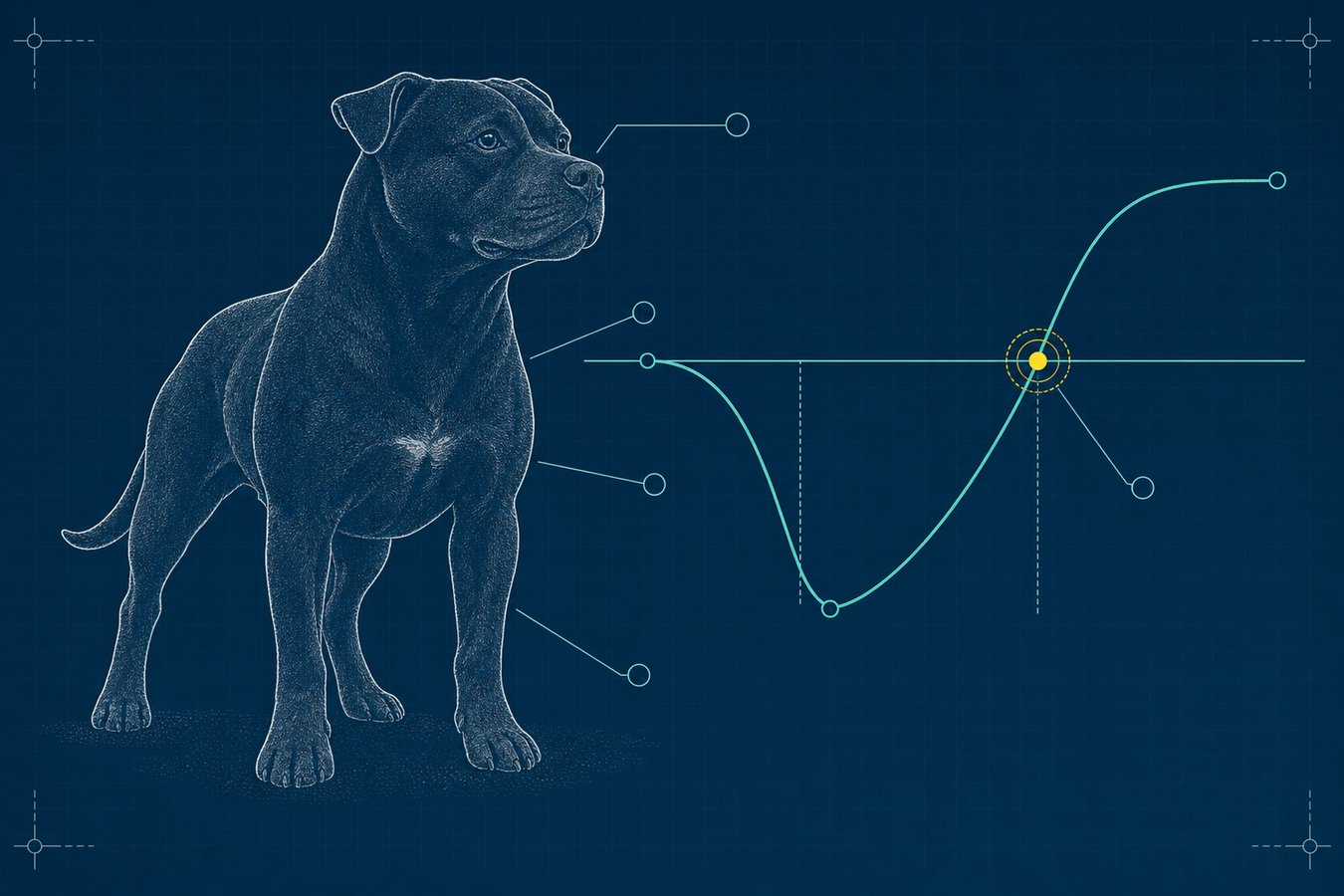
Dogs facing the same stress or environmental change often respond very differently. This research studies the factors that help dogs recover and tests humane interventions designed to strengthen resilience.
$15,000 first-phase goal · Just launched
Goals extend as each phase completes and the next stage of the study opens for funding.
This research is still being organized. Tell us you are interested, and the Foundation will follow up as intake for this study opens. Sharing interest is not an application.
This gift is restricted to the Research & Innovation Fund and can only be used for that purpose.
Two dogs can encounter the same unfamiliar sound, person, environment, or stressful event.
One dog may react strongly but recover within moments.
Another may show a smaller initial reaction but remain anxious for hours, begin avoiding similar situations, or become increasingly reactive over time.
Traditional behavior assessments often focus on whether a dog reacts. They may pay less attention to how quickly the dog recovers, whether the dog can re-engage, whether the response spreads to other situations, whether the dog's behavior changes over time, which forms of support improve recovery, and which interventions accidentally make the problem worse.
The Resilient Dog Project will investigate whether recovery, flexibility, and re-engagement provide better measures of long-term wellbeing than reaction intensity alone.
Dogs experiencing fear, stress, shelter transitions, household disruption, or early adversity may receive broad labels such as anxious, reactive, fearful, aggressive, shut down, unsocialized, traumatized, difficult to place, or unable to adapt.
These descriptions may not explain the dog's actual capacity to recover or improve. Research is needed to identify:
Better resilience research could:
Participating dogs may complete a structured life-history and behavior intake, quality-of-life assessment, standardized recovery observations, sleep and routine tracking, video-based behavior review, environmental and caregiver assessment, optional wearable monitoring, welfare-positive intervention programs, repeated assessments over time, and adoption, placement, or household-stability follow-up.
Dogs would not be intentionally traumatized, chronically frightened, socially isolated, or exposed to severe stress. The study would focus on naturally occurring histories and humane interventions.
The project may create:
Gifts to this campaign are directed through the Research & Innovation Fund.