
Donate
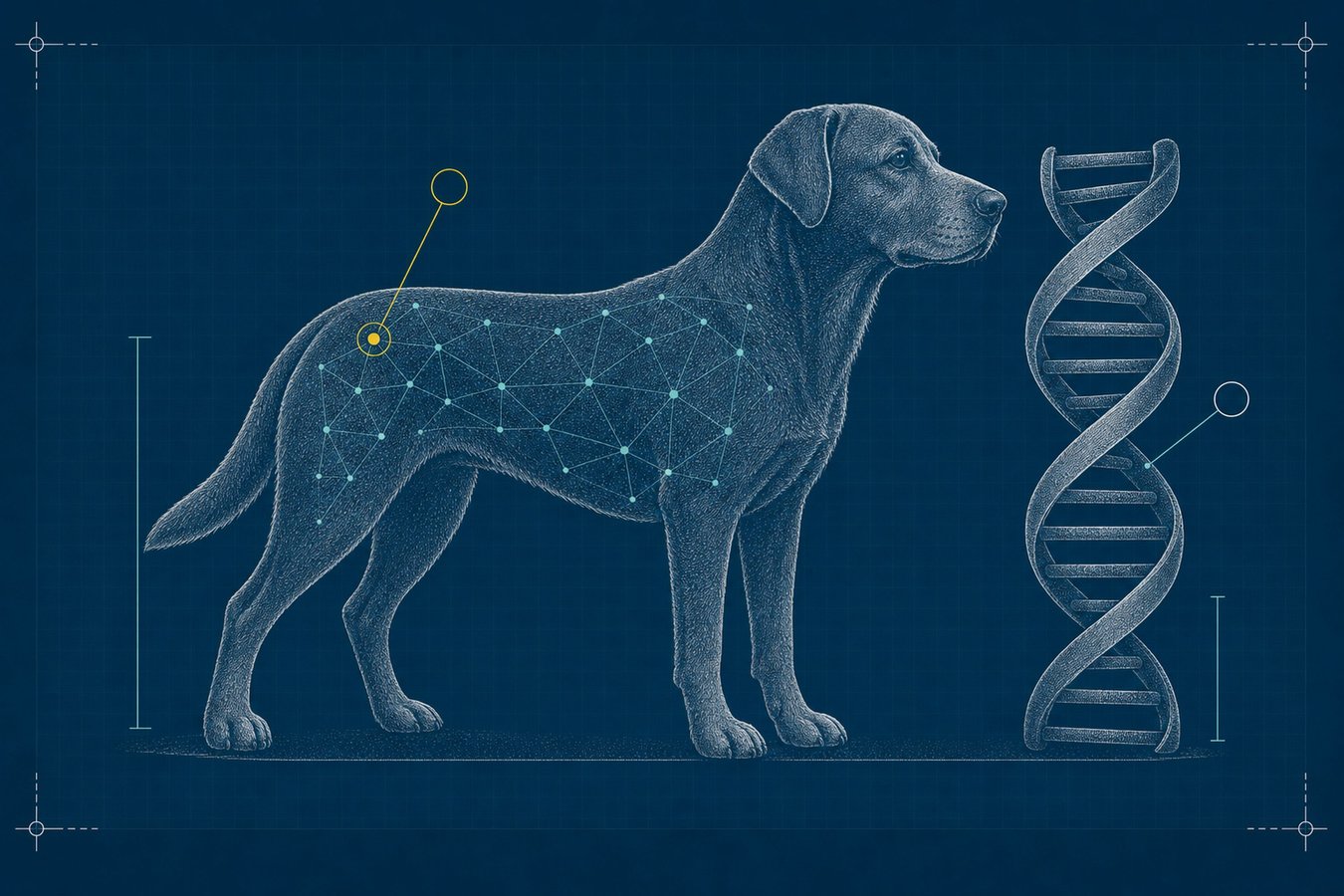
Blueprint schematic of a DNA double helix beside a dog silhouette built from a triangulated data-node constellation.
Research & Innovation Fund

The Dog Behavior Genome and Life Experience Project

A dog's behavior cannot be explained by breed, genetics, training, or life experience alone. This global research project studies how biology, genealogy, health, environment, and training interact to shape each dog's individual behavior.

Be one of the first to fund this phase

$15,000 first-phase goal · Just launched

Goals extend as each phase completes and the next stage of the study opens for funding.

This research is still being organized. Tell us you are interested, and the Foundation will follow up as intake for this study opens. Sharing interest is not an application.

This gift is restricted to the Research & Innovation Fund and can only be used for that purpose.

About this campaign

The story behind this campaign

Why does one dog recover quickly from a frightening experience while another develops lasting fear?

Why are two dogs from the same breed, or even the same litter, sometimes dramatically different?

Why do some dogs excel in working roles while others struggle in similar environments?

Dog behavior is frequently explained using simple labels: "It is the breed," "It is how the dog was raised," "It is genetic," "It is a training problem," or "The dog had a bad experience." Each explanation may contain part of the truth, but no single factor is likely to explain the whole dog.

The Dog Behavior Genome and Life Experience Project is a proposed global research initiative designed to study dogs as individuals by combining behavioral measurements with genetics, genealogy, health, development, environment, training, and major life experiences.

The Problem

Existing canine research often examines important factors separately. One study may evaluate genetics. Another may examine breed. Another may focus on training, health, fear, aggression, or cognition. This separation makes it difficult to understand how factors interact.

Additional limitations may include:

  • Small sample sizes
  • Limited geographic diversity
  • Heavy reliance on breed labels
  • Inconsistent behavior questionnaires
  • Lack of long-term follow-up
  • Limited direct observation
  • Underrepresentation of mixed-breed dogs
  • Underrepresentation of dogs outside North America and Europe
  • Incomplete medical or developmental histories
  • Failure to account for changing environments

A larger, integrated dataset could help researchers distinguish correlation, predisposition, environment, and individual variation more accurately.

Why This Research Matters

A better understanding of behavior could support:

  • More responsible breeding
  • Better puppy placement
  • More individualized training
  • Improved working-dog selection
  • Earlier behavior intervention
  • Reduced reliance on stereotypes
  • Better shelter adoption matching
  • Improved counseling for families
  • Clearer communication about genetic risk
  • More informed veterinary care
  • Better understanding of resilience and vulnerability

The goal is not to create genetic labels that define a dog's future. The goal is to understand probability, development, and individual variation well enough to make better decisions.

Proposed Study Design

Participants may contribute standardized behavior questionnaires, direct or remote behavioral assessments, video samples, developmental history, health history, training history, household and environmental information, pedigree or known family information, and optional DNA or saliva samples, veterinary records, and wearable data, with repeat assessments over time.

The project may follow dogs through major life stages and events, including:

  • Puppy development
  • Adolescence
  • Training programs
  • Household changes
  • Illness or injury
  • Pregnancy or sterilization
  • Working-dog selection
  • Aging
  • Behavior intervention
  • Changes in living environment

Expected Research Outputs

The project may create:

  • A large longitudinal canine behavior dataset
  • A standardized behavioral phenotype framework
  • Improved remote assessment methods
  • Genetic and environmental interaction models
  • Breeder education standards
  • Individualized assessment tools
  • Working-dog selection insights
  • Open research resources where appropriate
  • Scientific publications
  • Public educational materials
  • Responsible guidelines for communicating canine genetic findings

Ways to Fund This Project

  • $25 - Support One Behavioral Questionnaire: Helps process and validate one participant's information.
  • $100 - Support One Remote Assessment: Helps review standardized video and behavior data.
  • $250 - Support One DNA or Biological Sample: May help fund collection, processing, secure storage, and analysis.
  • $1,000 - Sponsor a Multi-Dog Data Cohort: Supports enrollment and follow-up for several dogs.
  • $3,000 - Fund a Research Dataset for This Phase: May support recruitment, secure data systems, analysis, or population outreach.

Gifts to this campaign are directed through the Research & Innovation Fund.
Frequently asked

Giving FAQ

Giving FAQs are being finalized. Contact the Foundation with any question in the meantime.

Trust & transparency
Legal name
The Partners Dogs Foundation, Inc.
EIN
88-3606092 · 501(c)(3) public charity, exempt since 2022
Where this gift goes
This gift is restricted to the Research & Innovation Fund and can only be used for that purpose.

Ready to help The Dog Behavior Genome and Life Experience Project?